
Our services › After-school and recreational activities
After-school and recreational activities
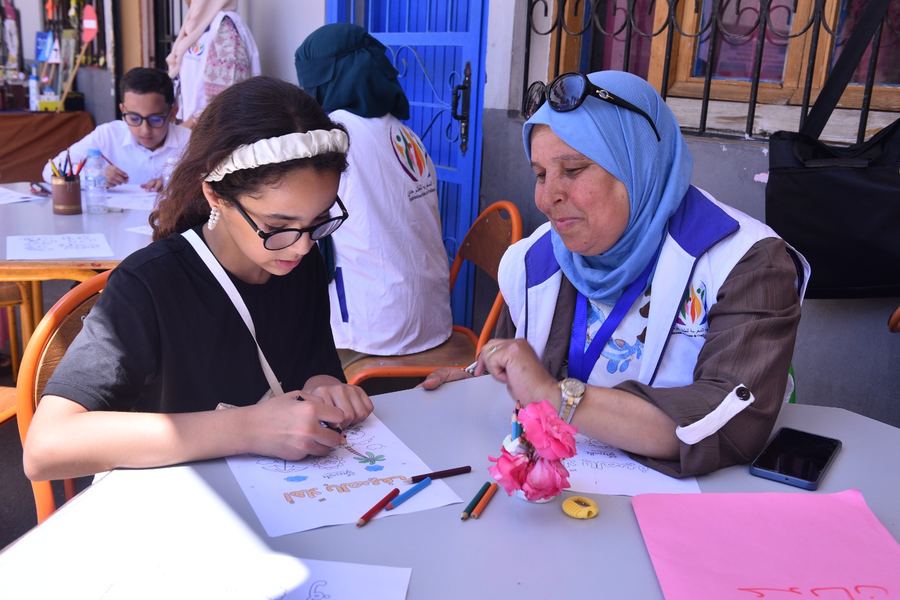
Learning through play, playing while learning
Inclusive school is good. But real inclusion is when your child is invited to a birthday party, when he sells his own biscuits, when he swims with other children and nobody looks at him strangely any more. At AMEA, after-school activities are not just ways to pass the time. They are therapy disguised as fun. And sometimes, they are the first steps towards a career.
1. Why are after-school activities vital for a child with ASD?
What school cannot give
- Self-esteem: At school, he is always the one who needs help. In the bakery workshop, he is the baker. He sells HIS bread. He is proud.
- Generalisation: He learned PECS in the classroom. Will he ask for "water" at the swimming pool? At the bakery? Only if he is trained in real life.
- Friendship: Friendships are not made in class, with instructions. They are made baking cakes together, splashing each other at the pool.
- Parental respite: 2 hours where your child is happy somewhere else and you can breathe. Without guilt. Because he is making progress.
Every AMEA activity has 3 hidden goals
- Fun - otherwise he will not come back
- Independence - doing part of the task alone
- Social - doing it WITH another child
2. Workshops scheduled by AMEA in 2026 - Fixed programme
Workshop 1: bakery - "The Little Bakers of AMEA" - Flagship workshop
It is the children's favourite workshop and the one most funded by the INDH.
Why a bakery for autism?
- Perfect for the senses: touching soft flour, smelling warm bread, watching dough rise - 3 senses regulated without effort
- A natural TEACCH sequence: flour -> water -> knead -> rest -> bake -> sell - visual from start to finish
- Fine motor skills: kneading = proprioception that calms, shaping small balls = fine pincer grip
- Independence and pride: he goes home with HIS bread that the whole family eats. "I made it."
How it works - Every Wednesday 10:00-11:30 - AMEA premises, Ain Chock
- 10:00: Visual welcome - workshop schedule in pictograms + hand washing as a visual sequence
- 10:10: Kneading - each child has his own small tub - the helper shows, the child imitates - no speech, just gestures
- 10:30: Dough resting - meanwhile, the social scenario "I wait" with a visual timer - we drink water
- 10:40: Shaping - small rolls, baguettes, msemen - depending on level
- 11:00: Baking - we wait by washing up - independence
- 11:20: Pretend sale, then a real one - each child sells his bread to a parent using PECS "I want 5 DH" / "Thank you" - this is AAC in a real situation
- 11:30: Tasting and communication notebook - a photo of the child baker is sent to the parents
Group: 6 children max - 2 trained educators + 1 volunteer mother
Age: 6-16 years - mixed levels, the older ones help the younger ones
Final product: Every month, a real sale at the AMEA solidarity market - profits go to the child
Workshop 2: making goods and crafts - "The Little Creators"
Formerly called "making goods" - we renamed it to give it more value.
3 sub-workshops in rotation
A. Sewing and goods - Monday 14:00-15:30
- Why? Fine motor skills, sequencing, usefulness. The child sews his own baker's apron, his PECS bag, his sensory cushion.
- TEACCH tasks: threading a large needle, sewing straight with a visual guide, ironing with help
- Products: AMEA aprons, "I am autistic and proud" tote bags, weighted sensory cushions, PECS pouches - sold for the benefit of AMEA
- Partnership: with the Ain Chock women seamstresses' cooperative - intergenerational inclusion
B. Pottery and clay - Tuesday 10:00-11:30
- Why? The ultimate proprioception - cold clay that warms up in the hands calms hyper-reactive children. No verbal instruction needed.
- We make: bowls, pencil holders, magnets - fired in the AMEA kiln
- Hidden goal: tactile tolerance for those who refuse to touch
C. Painting and recycling - Thursday 14:00-15:30
- We turn plastic bottles into plant pots, cardboard into doll houses, tyres into sensory swings
- Ecology + pride + motor skills
Group: 6 children max - 2 educators
Workshop 3: adapted and recreational sports
Adapted swimming - Saturday 9:00-10:00 - Partner Ain Chock swimming pool
- Why a pool for ASD? Water = proprioceptive wrapping that helps regulate sensations. Many children with ASD are soothed in water.
- Goals: tolerance of water, independence in the changing room with a visual sequence, swimming 5 m, playing with another child in the water
- Group: 4 children max - 1 lifeguard trained in ASD + 2 helpers in the water
- Outfit: changing-room pictograms "I get undressed" "Swimsuit" "Swimming cap"
Equine therapy - Once a month - Partner farm in Bouskoura
- Horse = vestibular rhythm + warmth + non-verbal relationship. Very effective for non-verbal children.
- 4 children max
Inclusive football - Friday 16:00-17:00 - Casa pitch
- Match with neurotypical children from the neighbourhood - simplified visual rules - no competition, just passing
Workshop 4: music and theatre - "We express ourselves differently"
Music - Wednesday 15:00-16:00
- Djembe, piano, singing with lyrics in pictograms. Music = structure, turn-taking, waiting for your turn - everything that is difficult with ASD
Shadow theatre and puppets - Saturday 11:00-12:00
- Social scenarios acted out with puppets: "I say hello", "I lend my toy", "I manage my anger". The child watches, then plays.
3. Inclusive recreational activities - Real leisure
This is not therapy, it is fun. And it is a must for being happy.
- Monthly outings: Sindibad Park, Dream Village, Ain Diab beach with a sensory protocol - headphones, mobile quiet corner, pictograms - 1 Saturday a month - parents invited
- AMEA birthdays: Every month, we celebrate the month's birthdays - cake made in the bakery workshop - every child is celebrated - invitations in pictograms
- 3-day summer camp: Bouskoura or Mohammedia - with parents for the little ones, without parents for the older, independent ones - once a year - INDH application
- AMEA annual festival: June - exhibition and sale of bakery + goods + pottery creations - children's parade - certificates handed out - the wali and Entraide present - It is your showcase for funders
4. How much does it cost - Solidarity economic model
- Real cost per workshop: 400 DH - educators + materials + premises
- Family contribution: 50 DH/workshop - to give value, not to make a profit
- Free: For vulnerable AMO Tadamon families, on application - 30% of places
- Funding: Your Donations and support, and sales of bakery products + goods - 30% of the budget -, Entraide Nationale "Épanouissement" agreement, INDH integration axis, private sponsors - your sponsors page
Every child has his activities passport
A small booklet with a photo, the pictograms of the workshops, a stamp for each attendance, a photo of his creation. He shows it at school. "Look, teacher, I am a baker."
Your child will not remember how many hours of speech therapy he had. He will remember the day he sold his first loaf and everyone applauded him. At AMEA, we treat with exercises, but we heal self-esteem with flour, clay and water.
I make this donation to help these children take part in activities.